
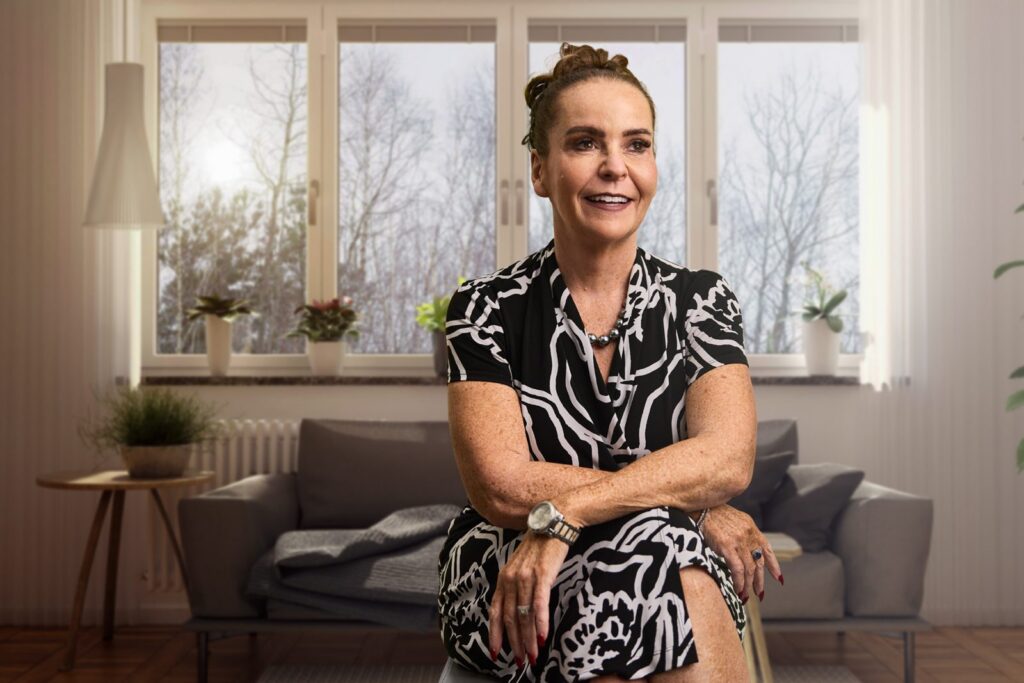
Leanne was sponsoring the Valley Maple Leafs when she first encountered 270 West. Our booth was beside hers, and a team member began talking with her husband about what we do. Knowing that Leanne, a mortgage broker with ties to the military community, often connects people with services, he thought she could refer veterans to us. Neither of them had considered that Leanne might need our support herself.
Three years of service, lasting effects
Leanne joined the military in 1993, shortly after leaving school. Two cousins serving in the military helped her understand the trades available and what to expect.
She arrived with ambition. She earned an athletic award during basic training and an Admiral O’Brien Award during her naval training. She believed she could do the work and build a career.
But her experience also included sexual harassment and assault. Those experiences contributed to a military life that was very different from the one she had expected.
She left after three years. A knee injury sustained during training continues to affect her, alongside other lasting effects of her time in uniform.
An earlier claim completed on her own
Years after leaving the military, a friend asked whether Leanne had ever applied for disability benefits related to her knee. She had not realized that the injury was something she could pursue through VAC.
Leanne completed the claim herself and received compensation. What she still did not understand was that an accepted condition could also open access to treatment coverage. For years, she continued paying for some knee treatments herself without realizing VAC coverage might be available.
“I had no idea I had coverage for my knee.”
When the conversation turned to Leanne
As Leanne spoke with a Benefit Navigator, she mentioned her participation in a lawsuit related to sexual misconduct during her service. She had assumed that process was the extent of the support available to her. Their conversation helped her see that disability benefits and health-care support, including counselling, were separate things she could explore.
Leanne’s first meeting with us took place at our Dartmouth office. She talked about her service and health concerns that had continued in the years since. As they discussed what might warrant a closer look, she began to realize there was more than one question to consider.
She also valued being able to decide how much to share:
“If you’re comfortable talking about more, you can. But if you’re not, you’re also not required to.”
One manageable step at a time
Leanne was busy with her business. She could not make appointments and applications her entire working week.
We discussed the broader picture, then helped her concentrate on individual claims and assessments as she was able to proceed.
“They’ve just been guiding me through each one separately, and it takes time.”
She also valued being able to ask questions as new information emerged. Our conversations helped her learn about treatment coverage and other benefits she had not previously understood.
Some assessments did not lead to an award. She still valued having help arranging them and understanding the process.
The relationship gave her a point of contact, a clearer direction and room to move at a manageable pace.
Looking beyond an immediate payment
Leanne talks about compensation, but also about counselling, treatment and the reassurance of understanding what support is available.
Her concerns extend into the future. She thinks about how her knee may affect everyday activities as she gets older and what help she may eventually need.
The most important change in her account is awareness. She no longer feels she is discovering support only by accident. She has people she can ask, and a clearer understanding of how to take the next step.
“I felt looked after.”